When you walk into a supermarket and see rows of perfectly leveled bottled water, have you ever wondered how it’s done? The unsung hero behind this precision is the Filling Machine.
1. What is a Filling Machine? Definition & Core Functions
“At its core, a filling machine accurately dispenses specific amounts of liquid, powder, or granules into containers such as bottles, jars, or pouches.”
More Than Just “Pouring Liquids”
Modern filling systems, such as those from MG Machinery, are sophisticated integrated systems. Key functions include:
- Container Positioning: Ensuring every bottle is perfectly aligned under the nozzles.
- Precise Metering: Utilizing volumetric, weight, or level-based sensors to ensure every drop meets the standard.
- Hygiene Control: Essential for the food and beverage industry to maintain a sterile environment.
2. How Do Automatic Filling Machines Work?
Watching an automatic water bottling machine in action is a symphony of engineering. The typical automated process includes:
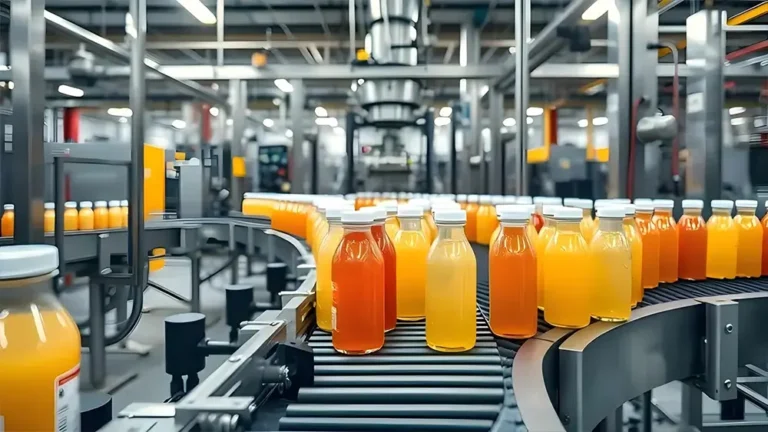
- Infeeding: Empty bottles enter the system via a high-speed conveyor.
- Rinsing: High-pressure nozzles clean the interior of the containers before filling.
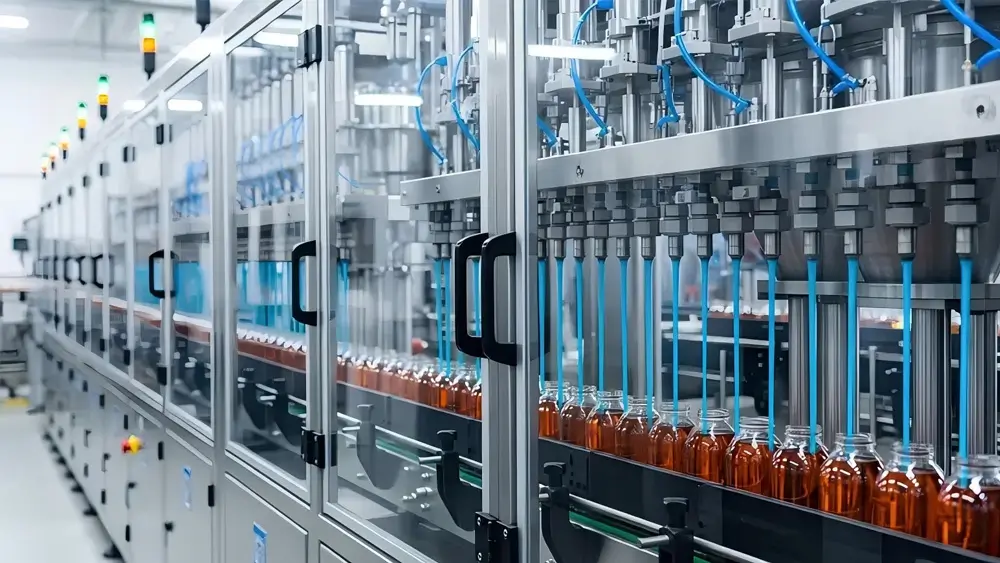
- Precision Filling: Filling heads descend, and sensors monitor the flow in real-time to prevent overflow.
- Capping & Output: Bottles are immediately sealed to preserve product integrity and freshness.
3. Rotary vs. Inline Filling Systems: Which One to Choose?
In the industrial world, the Rotary Filling Machine is synonymous with high-volume output. Unlike the “stop-and-go” motion of inline machines, rotary systems use a continuous carousel platform.
Advantages of Rotary Systems
- Continuous Production: No downtime between bottles, leading to massive output.
- Space Efficiency: Handles more bottles per square meter of factory floor.
- High Stability: Better mechanical synchronization during high-speed operations.
4. Technical Breakdown: Key Components of a Filling Line
Understanding the “internal organs” of your machine helps in making informed purchasing and maintenance decisions:
A. Conveyor System
The “legs” of the machine. In an automated line, conveyor speed must sync with filling head action down to the millisecond. Sokos uses high-grade VFDs to ensure smooth movement without bottle tipping.
B. Filling Valves
The “heart” of the machine. Depending on viscosity (e.g., thin water vs. thick oil), valve designs differ. For 1-liter water bottles, gravity or pressure-based valves are preferred for speed and foam reduction.
C. PLC Control System
The “brain.” Modern touch-screen interfaces allow operators to monitor hourly yield, fault alarms, and filling accuracy in real-time.
5. Quick Selection Guide: Which Machine Fits Your Business?
| Business Scale | Recommended Equipment | Core Benefit |
|---|---|---|
| Startups | Basic Automatic Water Filler | Low cost, high reliability |
| Large Scale Factories | Rotary Filling Systems | Maximum throughput & ROI |
| Specialized Lines | 1L / 5-Gallon Dedicated Units | Optimized for specific specs |
Frequently Asked Questions (FAQ)
Q1: When should I upgrade from manual to automatic filling?
When labor costs rise and you can no longer guarantee consistency or hygiene standards. Automation is about quality control as much as it is about speed.
Q2: Why choose MG for your bottling needs?
MG machinery delivers exceptional durability and smart engineering, conquering real-world factory conditions rather than just surviving laboratory settings
Q3: Is maintenance difficult for these machines?
Dedicated machines (like 1L fillers) are actually easier to maintain because their structure is fixed. Regular cleaning and lubrication are usually all that’s required for years of service.
Conclusion
The filling machine is the heart of your production line. Choosing the right equipment—whether rotary or inline, general or specialized—directly impacts your competitiveness. Before purchasing, analyze your yield requirements and bottle specs to avoid costly mistakes.
Ready to upgrade your production? Contact MG today for a customized consultation!